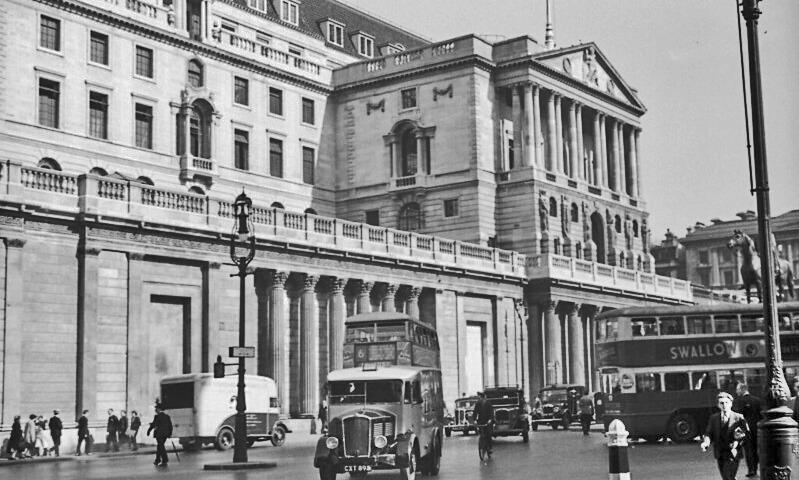
The Bank of England
After the Dissolution of the Monasteries their gold started to enter general circulation. This attracted goldsmiths from Amsterdam to come and set up business as keepers of the gold, giving receipts which served as the first rudimentary banknotes or cheques. By 1650 the first bank had been established, in Nottingham. The charging of high rates of interest was introduced, especially in times of war and when it was the monarch who was the borrower.
In this way the financial system based on debt began, eventually resulting in the formation of the Bank of England in 1694 and the creation of new taxes to help the government pay the interest on its borrowing. Meanwhile, the Bank became gradually more integral to governmental monetary policy and it gained the monopoly on issuing the national currency.
The Bank remained privately owned until 1946, when it was nationalised. Its dual obligations — to its shareholders and the national economy — had been under much criticism for many years. In 1997 it was released from political control and became somewhat ‘independent’. Interest rates are set by a committee made up of five Bank employees comprising the Governor, three Deputy Governors and their Chief Economist, plus four economists appointed by the government.
(Image: Richard at Flickr.com / CC BY 2.0)