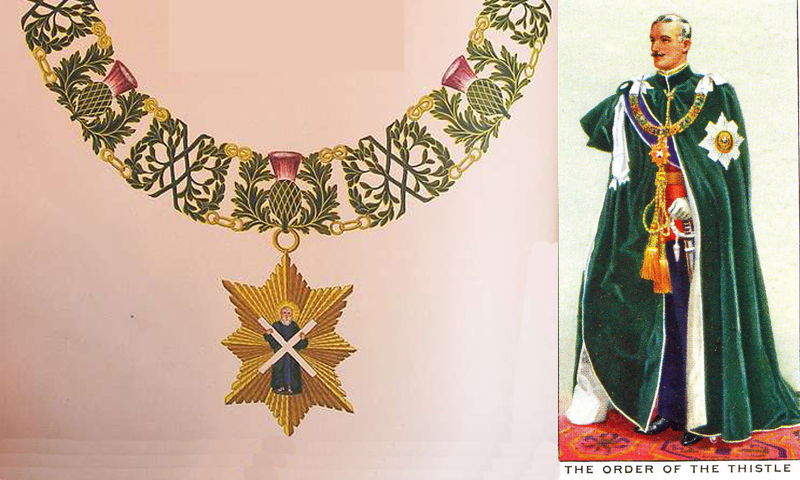
Order of the Thistle
The Order of the Thistle in the Honours system is second only to the Order of the Garter, of which it is the Scottish equivalent – only those born in Scotland or spending most of their working lives there are eligible. It rewards exceptional contributions to “Scottish life”, and Knights and Ladies of the Order come from a range of disciplines in science, law, academia and the government. Non-peers have been among those selected since 1876.
King James VII & II (1633-1701) instituted the Order in 1687 during his short reign of 1685-88. He used it as a mark of royal service, initially by eight Knights, four of whom subsequently went with the exiled King to France. Queen Anne (1665-1714) revived the Order 15 years later but restricted it to Protestants, a rule which stood for three centuries. In 1827 the number of concurrent members was increased from 12 to 16. Royalty count as additional members.
The patron saint of the Order is, of course, St. Andrew and the thistle is Scotland’s national flower. The original robes that Knights wore were of green velvet, on which were embroidered 250 thistles in gold. In 1910 the Order was finally allocated its own small chapel, in Edinburgh, with the first Knight being invested there in 1911.
(Images: picryl.com / Public domain)