
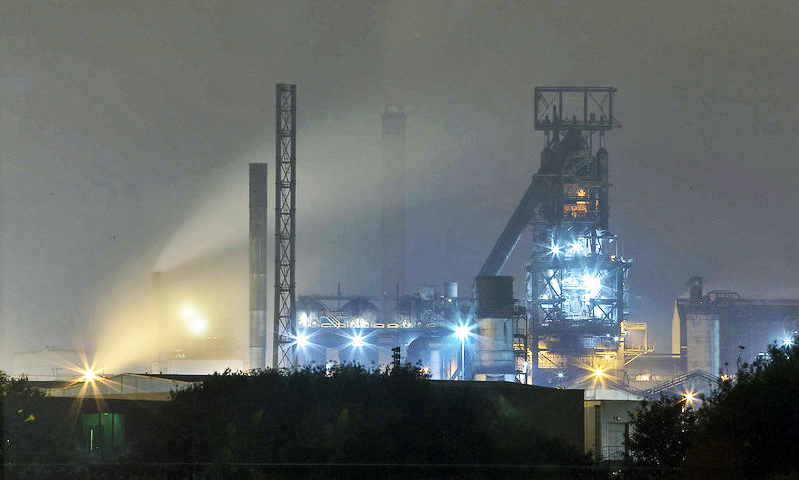
Port Talbot
Generations of the Talbot family owned an estate in Margam on the South Wales coast. In 1836 Christopher Talbot (1803-90) had docks built to facilitate industrial development and they were named Port Talbot. This became the name of the ensuing ‘boom town’, best known for having been a major location for both British Steel and BP.
Coal-mining began there as early as 1249 and in 1774 copper-mining began too. In 1825 the town saw its first blast furnace arrive and tin-plating was established. The community grew, with many Chapels constructed as social hubs. In 1905 the first steelworks were founded. After WW2 1,000 houses were constructed for steelworkers, including 900 on cleared sand-dunes.
Workers also enjoyed company-funded leisure facilities, such as a yachting club on the associated 260-acre reservoir. By 1965 the population had risen to 51,000 and in 1968 BP selected Port Talbot for massive investment, but their petrochemical plant eventually closed in 2004. In 2007 the steelworks became foreign-owned and were closed in 2024.
Meanwhile, Emily Talbot (1840-1918), who funded water supplies, parks, baths and sewers in the wake of four cholera epidemics was the last Talbot and the estate was sold in 1941 and in 1973 Glamorgan County Council bought it and opened it as Margam Country Park with its Grade I Listed garden.
(Image: Steven Vacher at Flickr.com / CC BY-NC-ND 2.0)