
Trafalgar Day
Vice-Admiral Lord Horatio Nelson (1758-1805) was an incomparable naval hero who sealed our dominance at sea throughout the 1800s by a series of naval victories, culminating in the Battle of Trafalgar, an overwhelming defeat of the combined French and Spanish fleets off Port Trafalgar, Spain, in 1805. The date of the battle ~ 21st October ~ during which Nelson was killed, is commemorated as Trafalgar Day.
As usual, Nelson’s plan was unconventional and he led from the front after giving his men the signal that “England expects that every man shall do his duty”. A total of 60 battleships grappled together, but the British did not lose any of their 27.
Nelson, from Norfolk, had joined the Navy aged 12 and shown such qualities that he was soon an officer. His skill, courage, superior tactics and man-management made him an instant favourite with the public back home, who were grief-stricken at news of his death, and his funeral at St. Paul’s Cathedral was attended by thousands.
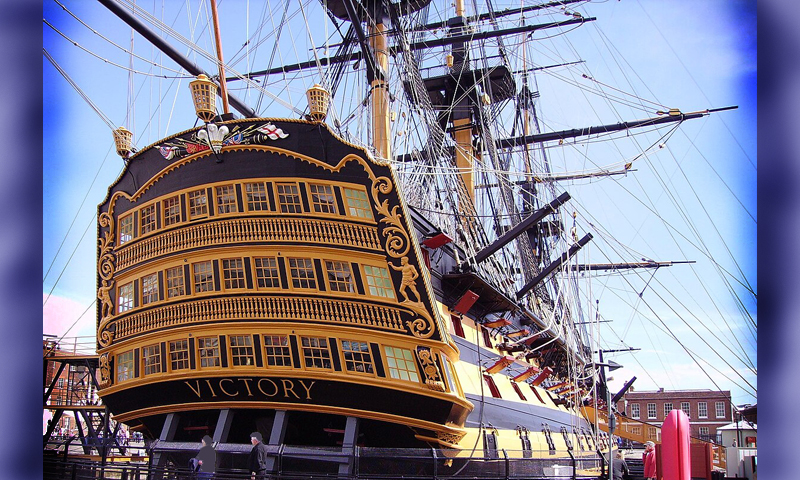
Trafalgar Square was so named in 1835 and Nelson’s Column erected there a few years later. Trafalgar Day is marked by parades, ceremonial dinners and wreath-laying at statues of Nelson and on his final ship, HMS Victory, in dry-dock at Portsmouth.
(Image of HMS Victory: Ballista at Wikimedia Commons / CC BY-SA 3.0)