
The Lifeboat
As a collection of islands set in what can be treacherous seas, it is unsurprising that Britain is where the lifeboat was invented. At the time ~ the late 1700s ~ there were around 1,800 shipwrecks every year on these shores and it was one in particular, in the mouth of the River Tyne in 1789, that was the catalyst.
Though the crew of Adventure were close to land, the appalling conditions prevented their rescue and they drowned as men on the dock watched helplessly.. A group of local businessmen set up a competition for the design of a lifeboat. Accounts differ but the upshot was that Yorkshireman Henry Greathead (1757-1818) emerged as the winner. He went on to manufacture 31 lifeboats from 1790 on, one of which has been preserved:-
Greathead never patented his design as he viewed it as a gift to humanity. His boats were 31′ x 10’6″ and the sides were packed with copper-encased cork. They could take 20 people and had 10 short oars for manoeuvrability.
Before Greathead, Lionel Lukin (1742-1834) of Essex had patented his “unimmergible boats” in 1785, which had pockets of air built in and a false iron keel to keep it upright. He made just one version of it, for Bamburgh Castle in Northumberland.
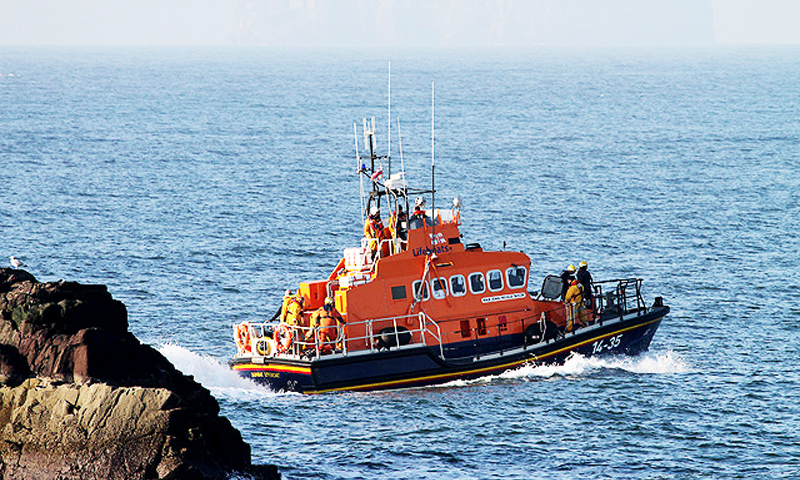
(Top image of a modern lifeboat setting off to rescue a whale from nets: Walter Baxter at geograph.org.uk / CC BY-SA 2.0)